【Guangdong Lianghui】Huo Qishan: Remove Bottlenecks and Obstacles to Yacht Free Travel
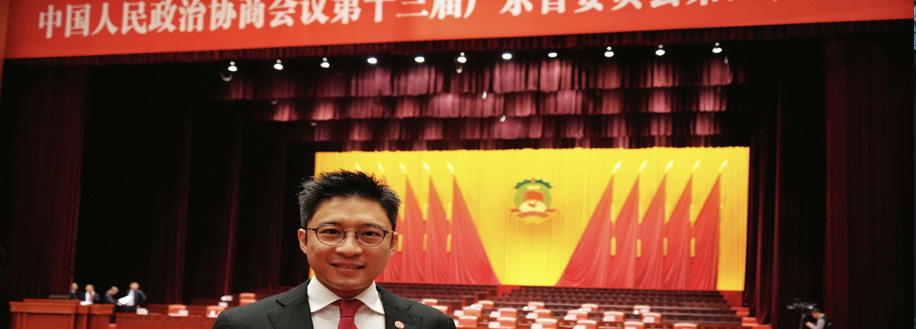
On January 25, the Fourth Session of the 13th Guangdong Provincial Committee of the Chinese People's Political Consultative Conference (CPPCC) opened in Guangzhou.
Huo Qishan, a Standing Committee member of the Guangdong Provincial CPPCC and Deputy Director of the Committee for Hong Kong, Macao and Taiwan Affairs, put forward proposals at this year's Guangdong Lianghui. He stated that the current period is crucial for advancing yacht free travel. The priority is to dismantle institutional barriers and improve connectivity mechanisms, thereby fostering a new highland for marine industries in a world-class bay area.
Huo analyzed that challenges remain in fully implementing Guangdong-Hong Kong-Macao yacht free travel, particularly cumbersome entry and exit procedures. He suggested enhancing data connectivity between maritime, customs, and border inspection authorities of Guangdong and Hong Kong. Pilot programs should be launched at designated piers in the Guangdong Free Trade Zone to implement a system of "one-time declaration, shared by three regions" for yacht, crew, and passenger information. This would realize a fully digital and frictionless process for advance notification and customs clearance, establishing the nation's most efficient yacht immigration management model广东省人民政府.
Furthermore, Huo urged accelerating the mutual recognition of yacht driver's licenses across Guangdong, Hong Kong, and Macao中国政府网. He proposed jointly establishing a Greater Bay Area yacht driver training center to provide refresher courses for licensed operators seeking recognition, issuing certification to ensure their familiarity with local waters and regulations across the three regions.
He also advised encouraging Hong Kong insurance companies to develop comprehensive yacht insurance products tailored for cross-border navigation in the Greater Bay Area. Concurrently, he called for supporting Hong Kong financial institutions in offering yacht financial leasing and mortgage services to mainland buyers, lowering ownership barriers and unlocking consumption potential.
To build a world-class coastal economic belt and stimulate cultural, sports, and tourism consumption, Huo recommended designing high-end "multi-stop, one-trip" tourism products. These would integrate Hong Kong's urban charm, Macao's cultural heritage, Zhuhai's islands, Shenzhen's innovative dynamism, and Guangzhou's historical culture, launching multiple cross-border yacht routes. He encouraged partnerships between Hong Kong travel agencies and mainland enterprises to develop high-end custom itineraries combining business, exhibitions, celebrations, and leisure. Key ports of call—including Hengqin (Zhuhai), Nansha (Guangzhou), Dapeng (Shenzhen), Victoria Harbor (Hong Kong), and Coloane (Macao)—should upgrade shoreline facilities, constructing or renovating high-standard yacht marinas with supporting waterfront commercial complexes, brand stores, boutique hotels, water sports centers, and maintenance bases.
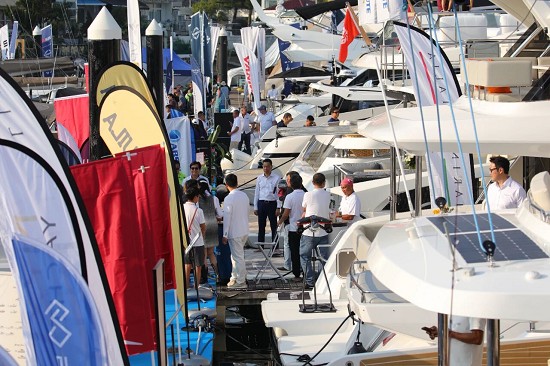
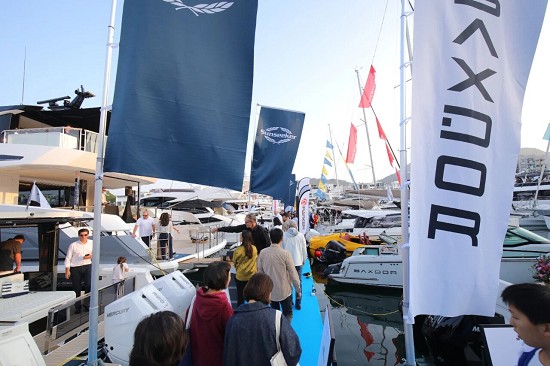
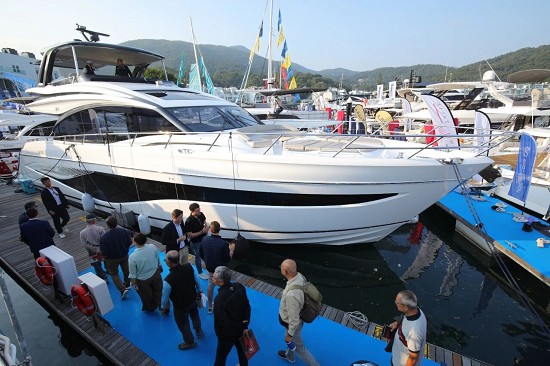
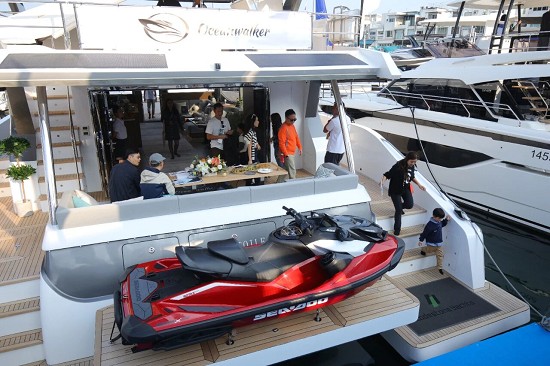
Huo proposed leveraging the Hong Kong Yacht & Boat Show as a flagship event, collaborating with Shenzhen, Zhuhai, and other cities to co-host the "Greater Bay Area International Yacht & Sailing Show." Drawing inspiration from the America's Cup, he suggested launching the "Greater Bay Area Cup" race series to build an independent brand.
Regarding upgrading manufacturing in the Greater Bay Area, Huo emphasized that implementing yacht free travel will stimulate the shipbuilding industry. Capitalizing on China's status as the world's largest shipbuilder and its robust new energy vehicle (EV) supply chain, he called for forming a Guangdong-Hong Kong-Macao Greater Bay Area Electric Vessel Industry Alliance. This alliance would combine Hong Kong universities (such as HKUST and PolyU), leading mainland enterprises, and Guangdong shipyards to establish R&D centers in Qianhai (Shenzhen), Nansha (Guangzhou), or Hengqin (Zhuhai), driving the formulation of international standards for electric vessels.
Guangdong, Hong Kong, and Macao could also establish a joint investment promotion office to attract leading yacht manufacturers from powerhouse nations like Italy, the Netherlands, and Germany to set up factories in the Guangdong Free Trade Zone, rapidly elevating industrial capabilities. Concurrently, efforts should be made to attract top international designers, engineers, and senior technicians to work in China, while supporting vocational colleges (such as Guangdong Ocean University) in partnering with enterprises to offer yacht design and manufacturing programs, nurturing local craftsmen and enhancing craftsmanship.
Huo stressed that pioneering a new highland for world-class bay area marine industries through Guangdong-Hong Kong-Macao yacht free travel is a systematic project. It will not only drive the development of Guangdong's high-end equipment manufacturing sector and create new growth areas for Hong Kong's professional services, but also serve as a model for China's manufacturing industry's transformation toward green, smart, and high-end development.
Shenzhen to Establish “Two Sets of Plates” Management Model for Hong Kong and Macao Yachts
On December 10, 2025, the Information Office of the Shenzhen Municipal People’s Government held a press conference. The Maritime Safety Administration of Shenzhen announced that it will vigorously promote yacht free travel between Guangdong, Hong Kong and Macao, establish a “two sets of plates” management model for Hong Kong and Macao yachts, formulate regulations on the certification of Hong Kong and Macao yacht drivers operating in Guangdong waters, and expand the waters open to yacht free travel in Shenzhen.
Reporter: Residents across the Guangdong-Hong Kong-Macao Greater Bay Area are paying close attention to the policy of “vigorously promoting Guangdong-Hong Kong-Macao yacht free travel and establishing a ‘two sets of plates’ management model for Hong Kong and Macao yachts”. Could you elaborate on this?
Shenzhen Maritime Safety Administration:The “two sets of plates” management model for Hong Kong and Macao yachts is an innovative reform measure taken by maritime authorities to advance regulatory alignment and institutional connection in the yacht sector across the Greater Bay Area. The model mainly includes the following components:
First, innovate the management model for Guangdong-Hong Kong-Macao yacht free travel.In the nine inland cities of the Greater Bay Area – Guangzhou, Shenzhen, Zhuhai, Foshan, Huizhou, Dongguan, Zhongshan, Jiangmen and Zhaoqing – a pilot policy will be implemented allowing Hong Kong and Macao yachts to apply for provisional ship nationality certificates of the Chinese mainland. Registered Hong Kong and Macao yachts will be managed equivalent to mainland yachts, improving the convenience of yacht free travel.
Second, build an institutional system for yacht free travel.We will take the lead in coordinating relevant departments to evaluate and designate the first batch of 6 yacht entry-exit ports, define waters for yacht leisure activities and recommend routes, and issue supporting regulations specifying the scope, activity areas and management requirements of Guangdong-Hong Kong-Macao yacht free travel.Meanwhile, we will establish a joint safety control mechanism for Hong Kong and Macao yachts entering and leaving the mainland in collaboration with customs, border inspection, public security, transport, port authorities and coast guard, to optimize cross-regional and cross-departmental coordinated supervision and realize information sharing and coordinated governance of Hong Kong and Macao yachts.
Third, strengthen institutional alignment among Guangdong, Hong Kong and Macao.We will promote the signing of yacht entry and exit agreements among the three regions, clarifying the supervision responsibilities and obligations of each party.We will strengthen yacht inspection cooperation with Hong Kong and Macao maritime authorities, urge Hong Kong and Macao yachts to be equipped with automatic identification systems (AIS) and very high frequency (VHF) radios in accordance with mainland standards, and gradually unify yacht inspection standards across the Greater Bay Area.We will advance mutual recognition of yacht operator certificates among Guangdong, Hong Kong and Macao, and establish supporting mechanisms for publicizing navigation rules, navigational environment and safety knowledge in the Greater Bay Area, so as to improve the safe operation capabilities of yacht drivers.
Connectivity in the Guangdong-Hong Kong-Macao Greater Bay Area is an irresistible trend.
Greater Bay Area Connectivity Inevitable, Deep Integration of Marine Economy an Unstoppable Trend
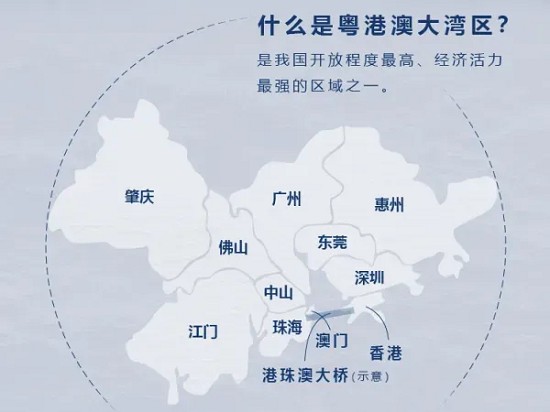
Connectivity within the Guangdong-Hong Kong-Macao Greater Bay Area (GBA) is an irresistible trend, and the in-depth integration and development of the marine economy is also an inevitable course!
In the first half of 2025, the Guangdong Maritime Safety Administration (GMSA) released two draft documents for public consultation: the Implementation Plan for Guangdong-Hong Kong-Macao Yacht Free Travel and the Administrative Measures for Guangdong-Hong Kong-Macao Yacht Free Travel in Guangdong Province.
Key Breakthroughs and Innovations
"Two Sets of Plates" Management Model: Hong Kong and Macao yachts may apply for a Provisional Chinese Mainland Ship Nationality Certificate for pilot use in the nine mainland cities of the GBA, without canceling their existing vessel registration.广东省人民政府
"Guarantee-Free" Policy: With the approval of the State Council, eligible inbound Hong Kong and Macao yachts are exempted from providing customs security.广东省人民政府
Border Inspection Facilitation: Crew and passengers of Hong Kong and Macao yachts may enjoy streamlined clearance via dedicated fast-track channels or centralized border inspection procedures.
Designated Ports & Waters:
First batch of yacht entry-exit ports: Guangzhou Nansha Passenger Port, Shenzhen Shekou Cruise Home Port, Shenzhen Airport Ferry Terminal, Zhuhai Jiuzhou Port, Zhuhai Wanshan Port, and Zhongshan Port.广东省人民政府
Authorized activity waters: The Pearl River Estuary and Shenzhen Bay.广东省人民政府
Application Process for Hong Kong & Macao Yachts
Required Documents:
Owner's identification (HK/Macau ID card, Mainland Travel Permit; corporate owners must provide registration certificates and valid business licenses).
Proof of legal vessel registration in Hong Kong or Macao.
Valid ship inspection certification.
Application Timeline: Upon submission to the relevant mainland maritime authority, the certificate can be issued in as fast as 7 working days.广东省人民政府
Validity Period: The certificate is valid for a maximum of 1 year. During this period, the yacht may enter and exit designated mainland ports multiple times, with each continuous stay or annual cumulative stay not exceeding 180 days.广东省人民政府
Hong Kong SAR's Official Stance
The Hong Kong Special Administrative Region (HKSAR) Government has expressed official support for Guangdong's proactive innovations and bold breakthroughs. The Hong Kong Marine Department and the Guangdong Maritime Safety Administration have established a special task force to jointly formulate implementation measures.
On September 17, 2025, John Lee Ka-chiu, the Chief Executive of the HKSAR, explicitly stated in his 2025 Policy Address delivered to the Legislative Council that the government will push for the full implementation of Guangdong-Hong Kong-Macao Yacht Free Travel.
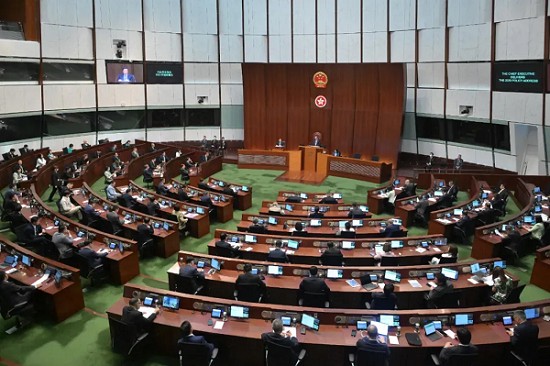
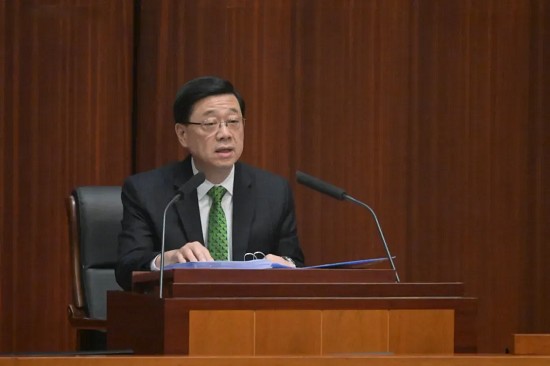
John Lee stated that Hong Kong, with 1,180 kilometers of coastline and 263 islands, is well-positioned to become a yachting hub in Asia. Hong Kong will upgrade supporting facilities for the yachting industry and promote high-end yacht tourism.
(i) Add approximately 600 new yacht berths, covering the former Lamma Quarry site, the expansion of Aberdeen Typhoon Shelter, and the Hung Hom Station waterfront project.
(ii) Advance the development of the Airport City Yacht Hub, providing an additional over 500 berths, including berths capable of accommodating superyachts of more than 80 meters in length.
(iii) Relax requirements for visiting yachts and establish a yacht movement monitoring system, allowing visiting yachts to sail freely and anchor safely within government-designated waters in Hong Kong without reserving berths at privately operated yacht clubs or marinas.
(iv) Upgrade electronic business systems to enable visiting yachts to submit entry information via a one-stop platform in advance for pre-clearance by relevant authorities.
(v) Authorize relevant Mainland institutions to conduct examinations and provide short-term training courses for local captains, facilitating Mainland captains of visiting yachts to obtain qualifications for navigating in Hong Kong waters, with a view to extending the arrangement to overseas regions in due course.
(vi) Promote the development of a Guangdong-Hong Kong-Macao Yacht Free Travel system, and discuss with the Guangdong Provincial Government facilitation measures for “Hong Kong yachts sailing north” and “Mainland yachts sailing south”.
Number of Registered Class IV Pleasure Vessels in Hong Kong
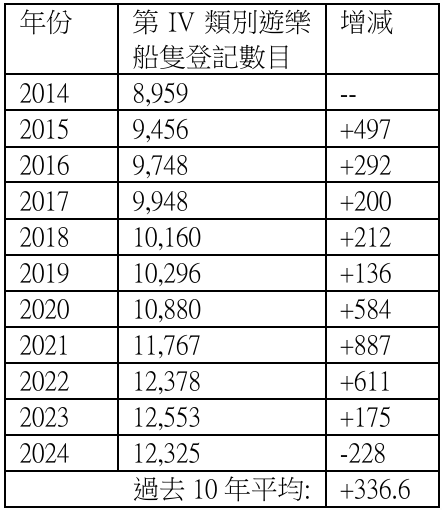
Beyond official efforts, the industry has also responded positively to these favorable policies.Yacht-related events in Hong Kong have been growing in scale, while an increasing number of enterprises, industry professionals, buyers and enthusiasts from the Chinese mainland — especially Guangdong — have shown strong interest.
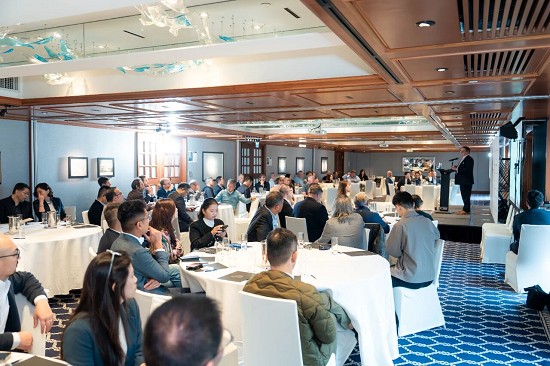
A case in point is the 26th Hong Kong International Boat Show & Forum, held in early December.